Guild vs Guild on private Ragnarok servers is the heartbeat of community competition. It blends character builds, siege engineering, economic planning, and social leadership into a weekly ritual that keeps a server alive. Players stick around not because of loot alone, but because GvG gives that loot purpose. If you are choosing where to play, or trying to elevate your guild from a loose squad to a disciplined force, understand that GvG is a system that touches every part of the game, from how you level on day one to the final push at an emperium.
What GvG Means in Practice
On classic and pre-renewal servers, Guild vs Guild usually centers on War of Emperium. Territory ownership, defense timings, portal control, and economic benefits all flow from these sieges. Renewal servers add different formulas for damage and cast times, which shifts the meta for jobs and gearing. But the essence holds: you fight in structured windows, on defined maps, with objectives that matter. The official game set that frame, and private servers interpret it with their own rules.
The details vary. Some servers run traditional Saturday sieges only; others host midweek mini-sieges or event wars. A conservative mid-rate might cling to episode-accurate castles and flags. A custom high-rate might rotate castles and add fresh rewards to keep veterans engaged. When you read a server website, check not just whether “WoE is active,” but how it is configured in the latest episode, what castles are open, and whether the drop and quest economy supports long-term combat.
The Role of Rates and Server Philosophy
Rates define tempo. On a low-rate private server with experience and drop rates under 10x, gearing takes time, so guilds invest in recruitment and retention. On a high-rate with instant 255 levels and 100x drops, you see rapid churn, creative but volatile metas, and a premium on execution over patience. Mid-rates tend to balance the two: you can assemble WoE-ready sets in a week or two with organized play, but you still need to plan.
Server philosophy matters as much as rates. Some owners pursue classic authenticity, featuring pre-trans or pre-renewal combat, fewer custom items, and official skill behavior. Others prefer renewal formulas, which change cast times, ASPD, and damage scaling, making jobs like Ranger or Genetic shine in ways they never did in the old meta. A third camp builds custom content: new cards, special GvG maps, and season resets. Each choice shapes how your guild fights.
If you are aiming for “the best” GvG, the answer depends on what you enjoy. Classic players want slow pushes and hard choke points with Wizards and Priests locking portals. Renewal fans appreciate faster kills, ranged dominance, and hybrid builds. Custom servers may grant powerful set bonuses and new classes that shake up stale lines. There is no single top server for everyone, only the right one for your group’s taste and time.
Anatomy of a Siege
A strong guild treats GvG like a project. There is a pre-fight routine, a battle plan, and a debrief. Even with no voice chat, leaders can manage a raid through party chat macros and clear roles. With organized comms, it becomes a real-time strategy match layered over a multiplayer RPG.
A standard flow on pre-renewal, mid-rate settings looks like this. First, a scout confirms which castles have active defenders and who owns them. Second, the guild consolidates at a forward save point, sets up consumables, and assigns roles. Third, the push begins at the outer portal. You clear precast, lock the entrance with a tank line, and move through to flags. Fourth, at the emperium room gate, you break through the second precast, set Safety Wall or Land Protector where it counts, and split into disruption teams and breaker teams. Finally, if you secure the emp, defense pivots to choke control, flag re-entry, and supply cycles. The tempo is quick. All those steps can unfold in five minutes.
In renewal, the same outline holds, but damage spikes are higher, ranged threats greater, and movement speed options wider. That makes positioning and protective skills even more important. If your Priests and Sorcerers lag, wipes happen in seconds. If your RGs, suras, or rangers push too far ahead, you lose shape and give free kills.
Jobs and Roles That Matter
Class balance depends on server episode, custom changes, and whether renewal is enabled. But roles, rather than names, stay consistent. You need the following pillars in any GvG composition.
Frontline disruption anchors fights. These are Knights and Paladins on pre-renewal, or Royal Guards and Rune Knights on renewal. They body block, use devotion or guard mechanics, and draw fire. A good tank player understands when to hold a choke and when to step into enemy Land Protector to force a reaction. On high-rates, they switch to reflect or HP-stack sets for survivability.
Area denial wins entrances. Wizards with Storm Gust, High Wizards with Meteor Storm, and Warlocks with Crimson Rock lock portals. Without controlled AoE, you cannot punish enemy entry. This role rises and falls with server cast settings; instant-cast high-rates create “wall of death” moments that require clever counterplay.
Protective support makes the line coherent. Priests and High Priests on classic provide Safety Wall, Pneuma, and status cures, while Professors and Sorcerers bring Dispel, Land Protector, and Spider Web or Vacuum on custom servers. In renewal, Sura and GX can threaten backlines, but without these supports, they cannot stay in.
Single target pressure breaks key players. Champions in pre-renewal, Sura in renewal, and Assassin Cross or Guillotine Cross in either ruleset pick high-value targets. A good guild assigns specific killers to enemy supports. If a guild’s Professors die on cooldown, their precast collapses.
Emp breaking is a specialty. Assassin Cross often owns this job in pre-renewal with high ASPD and EDP. In renewal, the emp’s HP and reduction change the math, inviting RGs, GX, or even RK to participate. Gear swap discipline matters: high-hit weapons for tap targets, then swap to the emp breaker set. If your server runs “no EDP in emp room” rules or custom emperium DEF, adjust.
On custom servers, you may see new job skills or items altering these roles. Some have expanded Taekwon branches or custom gunslinger sets that affect portal fights. A well written site will document what is available, what rates apply to skill changes, and how episodes roll out.
Gear, Consumables, and the Real Cost of War
A guild’s pvp strength is partly mechanical skill, partly budget. On any private server, even the most “no donate advantage” one, your access to specific cards, weapons, and potions determines how many mistakes you can absorb. Players often underestimate ongoing costs. Blue gemstone burn for Land Protector and Safety Wall. Acid bottles for Acid Demonstration. Yggdrasil berry consumption on high-rates can reach dozens per person per siege. If your server disables certain items in GvG, stock different options.
Card availability is shaped by drop rates. On a 10x drop server with classic episodes, high-end cards might still be a months-long chase. On a 100x or event-heavy server, guilds can farm them fast, which accelerates arms races. Neither approach is inherently better. Slower servers reward long-term planning and give newer guilds time to catch up through trading and smart picks. Faster servers create explosive metas and frequent counterplay.
Consumable procurement becomes a guild task. Some teams organize farming parties to supply Acid Demo alchemists or to gather poison bottles for GX. Others centralize funds: taxes from castles, loot from MVPs, and sales from event items go into a guild chest. If your leaders are transparent about who receives what and why, members contribute more willingly. If not, morale issues creep in.
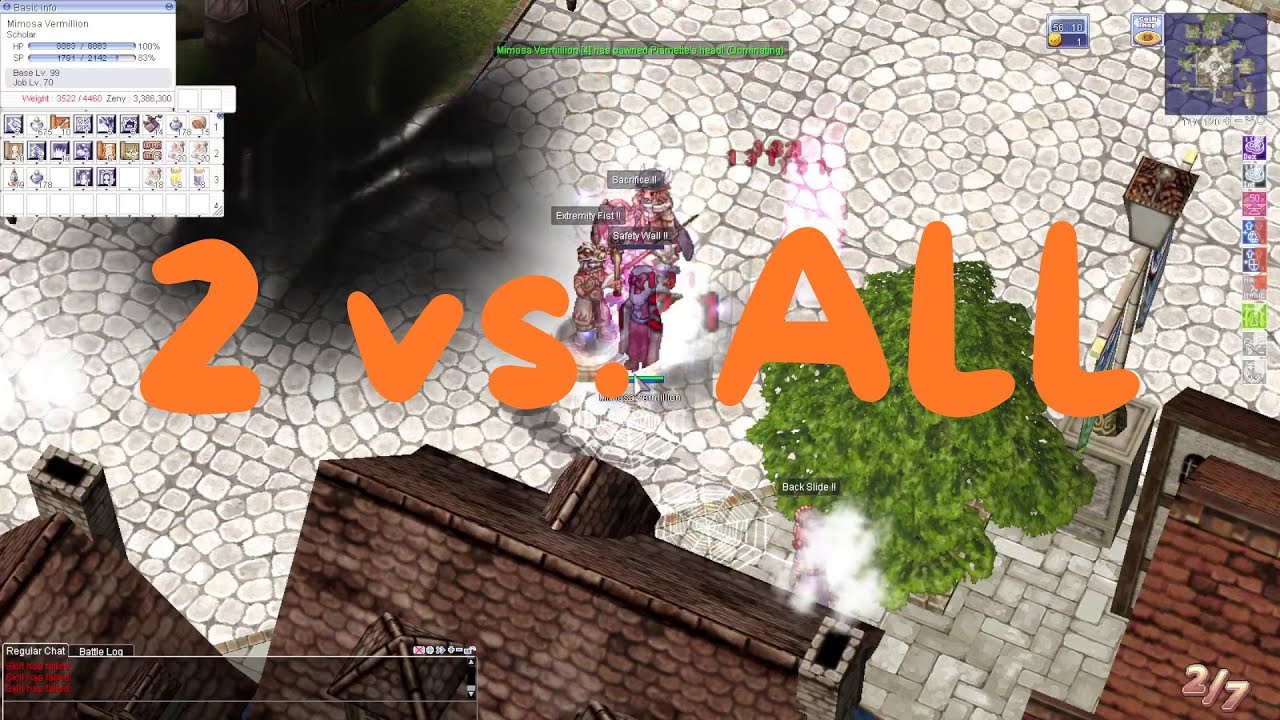
Positioning, Vision, and Tempo
The best guilds understand space. War of Emperium maps create natural choke points where AoE and knockback decide fights. Poor servers with buggy pathing or misconfigured knockback flags can warp this dynamic, so look for servers that test WoE flags, ground effects, and portal logic in the latest episode. Most quality private servers post patch notes for WoE fixes and solicit feedback from guild leaders.
Vision is subtle in Ragnarok Online. You can’t freely rotate the camera into walls, and certain precast stacks hide behind sprites. Use client settings that reduce visual clutter without breaking server rules. Keep sound on. Skilled assassins and champions listen for skill audio cues to pre-pot or Cloak. On renewal, the pace is faster, but the principle remains: if you read the movement of your front line and call pushes and retreats early, you trade better.
Tempo is the rhythm of your attack. If you wipe to a precast, do not trickle. Regroup at a map flag, buff together, and re-enter with a full set of protective skills. Good leaders call time-based cycles: two minutes to regroup, one call to push, twenty seconds to focus the LP zone, and a quick pivot if it fails. A guild that respects tempo can beat a stronger roster that plays on autopilot.
Communication That Works Under Fire
Do not flood comms. In a 30-player channel, only the lead caller, support lead, and scout should speak during a push. Everyone else answers with brief confirmations. Text macros in party chat help, but they lag in a spike. You can practice call-and-response in PvP rooms before siege. When you recruit, assess a player’s willingness to follow calls, not just their gear. One disciplined mid-rate guild I played with used a simple rule: nobody speaks during the first twenty seconds after a push call except the caller and the LP lead. Their win rate rose within two weeks, even without new items.
Written callouts still matter. Use guild notes to pin castle times, drop requirements, and class sign-ups. Post your pre-push checklist on your site or Discord so newer players know what to bring. With a geographically mixed community, latency changes the fight. Some servers run proxy services or gateway locations; if available, test them before siege night.
Choosing a Private Server for GvG
If you are evaluating servers, look beyond flashy banners and top-voter rankings on an aggregator site.
- Activity and schedule: Confirm WoE windows, time zones, and whether they align with your players. A server with two strong castles at mid-NA hours may be better than ten castles with no defenders in your slot. Rules and enforcement: Read the GvG rules. Are there clear bans on macros, packet edits, or third-party tools? Is there a process for reporting and a track record of visible action? Nothing kills a guild faster than losing to exploits on repeat. Balance notes: Renewal vs pre-renewal, classic vs custom, and the latest episode can change the viability of your classes. Scan patch notes for intentional balance tweaks. Servers that explain their changes build trust. Infrastructure: Ask about server location, DDoS protection, and whether the admins publish status updates during outages. The best GvG experiences happen on stable machines with low packet loss. Economy and accessibility: Check whether castle drops matter and whether the reward system encourages defense. If castle treasure is disabled, look for alternative incentives like guild quests or custom drops that feed back into siege.
That list is short on purpose. Most issues that frustrate GvG players fall under one of those five categories. Get those right, and you can adapt to everything else.
Classic, Pre-Renewal, and Renewal Metas
Classic often refers to pre-trans or early-episode play on a private server that tries to mirror the original game. The meta favors slow precasts, dedicated tanks, and precise debuffing. Professions like Blacksmith bring utility a modern player might overlook: Weapon Perfection and Overthrust at key moments shift DPS checks at the emperium. Stalker strips can turn a fight by disarming a front line.
Pre-renewal with trans classes is the most common private server configuration. Champions, High Wizards, High Priests, Assassin Cross, and Paladin create a recognizable rock-paper-scissors. Land Protector is the crown jewel. Position that rectangle correctly and you erase a wizard line; misplace it and you lose the push. If you like clear counterplay and team discipline, this ruleset stays rewarding for years.
Renewal changes math. Cast times split into variable and fixed, ASPD behaves differently, and damage scales with level in new ways. Ranged classes gain more control. Genetic with Acid Bomb, Ranger with Arrow Storm, and Royal Guard with Inspiration or Shield Press alter fights at mid-range. Some private servers tune renewal to keep it fair at mid-rates, for instance by trimming overpowered cards or disabling a few skills in WoE only. Before investing months into your character, read the server’s renewal notes carefully.
Customs That Help, and Customs That Harm
Custom content keeps older servers fresh, but it must respect the spirit of siege. Helpful customs include QoL that does not break GvG: rental buff rooms outside castles, weightless potions, or guild storage improvements. Custom quests that reward siege consumables make new players useful faster. Cosmetic bonuses that do not add hidden stats are ideal.
Harmful customs flood the battlefield with binary checks. If a single custom card negates crowd control for an entire party, or a special weapon doubles GvG damage without counters, the scene calcifies. Servers sometimes add new jobs or rebalance old ones to create variety. If they also publish transparent documentation and iterate quickly based on pvp feedback, those changes can be healthy. Without documentation, it feels arbitrary.
Training Your Guild, Not Just Your Gear
Gear progression is obvious. Training culture is rarer. Set aside one night per week for scrims in the PvP room or on a test castle if your server allows it. Run drills: five-minute cycles where supports practice layering Pneuma and Safety Wall while frontliners inch through a choke. Have assassins practice safe entry paths and recall positioning. Rotate shot-calling to build depth; real life happens, and relying on a single voice is risky.
Record fights. A simple screen capture of your frontline from two angles exposes gaps. You will notice priests drifting too far from tanks, or champs burning snap at bad times. Post the clips with timestamps and a measured tone. Avoid blame. Focus on adjustments: earlier LP, tighter portal footholds, clearer cues for berry usage.
Castle Ownership and the Guild Economy
Owning a castle brings pride, tax revenue, and strategic flexibility. It can also strain your roster if defense weeks pile up. On servers with meaningful treasure, holding for several weeks compounds wealth. On others, event-based rewards or a guild quest line might outpace treasure. Either way, treat castle income as a guild asset. State how much goes to supply purchases, how much is saved for emergency gear buys, and who approves withdrawals.
A cautionary tale: on a mid-rate renewal server with two active castles, one guild hoarded 70 percent of drops for leadership. They argued that top-heavy investment would speed gear catch-up for core breakers. Within a month, two support mains left for a rival team that ran a transparent ledger and reimbursed per-siege consumables. The rival took both castles within two weeks. Fair systems beat opaque ones.
The First Two Weeks on a New Server
When your guild migrates or starts fresh, the first fortnight decides whether you survive. Plan it like a campaign. Prioritize jobs that unlock pvp tools: Priests, Wizards, and Professors for pre-renewal, or a balanced spread including Ranger and Sura for renewal. Level in synchronized parties to share gear drops, with a goal to field one complete WoE party by the first siege window. Use the server site and Discord to find which quests offer fast access to utility gear or consumables. Many private servers run new-player events or mid-episode catch-up quests; take advantage.
Craft a simple role map early: which player can flex between breaker and scout, who can anchor as Paladin or RG, who can show up at odd hours for off-window defenses. If you lack a class, own it. You can still win skirmishes with disciplined movement and resource denial. I have seen a guild with no Assassin Cross stall two larger teams at the emp by running synchronized LP casts and a pair of relentless Champions.
Sportsmanship and a Healthy Community
Private servers live or die by their communities. Guild vs Guild is competitive, but harassment drives away new blood. Most servers are explicit: no targeted slurs, no account sharing, no exploiting. Enforce standards internally. If your breaker taunts every wipe or your scout leaks enemies’ personal info, you will find yourselves uninvited from scrims, and sometimes banned.
Positive rivalries keep populations active. Compliment a good defense in global. Share scrim times with newer teams so they have a way to improve. The more players learn the beauty of WoE positioning, the larger your pool of worthy opponents. That is how a server stays active while other servers fade.
Measuring Progress Beyond Castle Count
Guilds often judge success by how many castles they hold or how many emperiums they break. Those are useful, but incomplete. Track your wipe rate at portals, your average regroup time, your consumables per fight, and your attendance. Count how many supports you field each week; the ratio of DPS to support tells you if your recruitment is healthy.
A guild I coached moved from scraping one entrance to reliably taking three, not by recruiting stars, but by trimming regroup time from 90 seconds to 35. They set a verbal clock. From the moment the first player respawned, they called out every ten seconds. Everyone held until the pre-mark, then pushed together. It felt boring at first. Then they stopped trickling into Meteor Storm.
When to Pivot Servers
Sometimes the server is the problem. If the admin team refuses to patch GvG bugs, if latency makes sieges unplayable for your majority timezone, or if rules are enforced unevenly, consider moving. Do not jump impulsively. Talk to other guilds, gather data, and notify your roster with a clear plan and timeline. A coordinated start on a new site with your core roles filled will keep your players from drifting to random servers with no active GvG.
The healthiest private scenes are transparent. They publish episode roadmaps, engage constructively with guild leaders, and keep competition fair. If you find such a server, support it. Vote if the website uses rankings, report bugs respectfully, and participate in test events. Your efforts pay dividends when siege night rolls around and you face a full roster of equally hungry opponents.
The Joy That Keeps People Coming Back
Ask long-time Ragnarok players why they still log in after years. Many will mention a single fight: a last-minute emp break with ten seconds on the clock, a perfect LP landing into a wizard wall, a rescue Devotion that saved a breaker’s last swing. These moments rarely happen in solo play. GvG creates them by forcing classes and personalities to connect. You learn the cadence of your champion’s snaps, the timing of your professor’s Dispel, the way your paladin types when his shield is about to break.
Private servers make these stories possible in varied settings, from classic pre-trans to the latest renewal episode with modern balance. The best ones provide tools and stability; the rest is in your hands. If free you build a guild with clear roles, shared resources, honest leadership, and a taste for hard fights, you will find more than loot. You will find a community worth your time, a pvp arena that stays fresh, and a reason to log in early on siege day.
And if you are just starting, pick a server whose rules you respect, whose rates match your life, and whose admins care about fair play. Bring a few friends, level to first job together, then into second job and trans or third classes as your chosen ruleset allows. Learn the maps and the choke points. Show up when the gates open. The rest comes with practice, one portal at a time.